
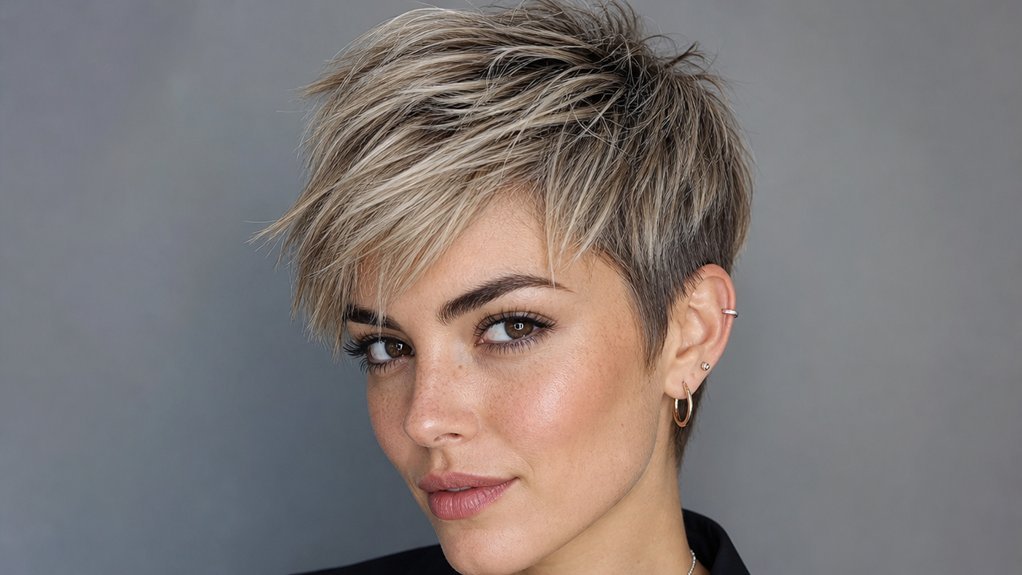
Choosing the right haircut starts with identifying your face shape to highlight your best features. You’ll want short pixies to frame your eyes or mid-length layers to control volume and texture. If you prefer length, use internal thinning to keep movement airy and light. Always match density to your hair type and use precise terminology with your stylist. Balancing your maintenance time with these professional techniques guarantees your signature silhouette stays sharp and healthy.
Key Takeaways
- Identify your face shape to select a silhouette that highlights features like high cheekbones or a strong jawline.
- Choose short cuts like buzzes or pixies for high-impact structure, requiring salon maintenance every four to six weeks.
- Use mid-length styles with internal thinning and face-framing layers to balance volume and highlight natural hair texture.
- Manage long hair through strategic point cutting and blended layers to prevent heavy shapes and increase natural movement.
- Match haircut density to texture by using blunt edges for fine hair and internal layers for thick, coarse strands.
Identifying Your Face Shape and Best Features
Before you settle on a specific cut, you’ve got to narrow down your face shape to guarantee the style complements your natural structure. Stand before a mirror and trace your reflection’s outline using a washable marker. Do you see a circular curve, a sharp-angled jaw, or a balanced oval? Identifying these contours prevents you from choosing a look that clashes with your silhouette. If you possess a strong, square jawline, you’ll likely want soft textures to diffuse the harsh edges. Conversely, if your face is round, you’ll benefit from height and volume to elongate your appearance.
Don’t overlook your best features during this assessment. If you’ve got striking eyes or high cheekbones, you should select a length that draws attention to those focal points. You’re building a foundation here. Once you understand your geometry, you’ll confidently choose a look that highlights your strengths rather than hiding them.
Short Haircuts From Buzz Cuts to Bobs
Cutting your hair short often boils down to a bold desire for change and low-maintenance styling. You’ll find that a buzz cut offers the ultimate liberation, stripping away distractions to highlight your facial structure with clinical precision. If you prefer a bit more versatility, the pixie cut provides a gamine charm that frames your eyes and cheekbones perfectly. You can play with asymmetrical fringes or undercut details to add a modern edge without needing hours in front of a mirror.
Moving slightly longer, the classic bob remains a perennial favorite for its sharp, clean lines. Whether you choose a blunt chin-length finish or a French-inspired look with bangs, you’re embracing a silhouette that exudes confidence. These styles don’t just save time; they redefine your aesthetic through deliberate geometry. You’ll appreciate how these cropped lengths accentuate your neck and jawline, proving that less hair often delivers a much bigger impact.
Mid-Length Styles That Balance Volume and Texture
Stepping away from the stark edges of shorter crops, you’ll find that mid-length styles offer a versatile middle ground where volume and movement take center stage. When you opt for a shoulder-skimming cut, you’re choosing a silhouette that supports layers without losing its foundational shape. You don’t have to worry about the flatness often associated with longer strands. Instead, you can utilize internal thinning techniques or point-cutting to remove bulk, allowing the remaining hair to spring upward. This creates a natural lift at the crown that lasts all day.
If you have naturally wavy hair, these lengths highlight your curl pattern’s bounce. You’ll notice that shattered ends add a modern, lived-in feel, while blunt perimeters maintain a sense of density. By incorporating face-framing pieces, you direct attention to your features. You’re effectively mastering a style that feels substantial yet light enough to respond to every turn of your head.
Managing Flow and Weight in Long Haircuts
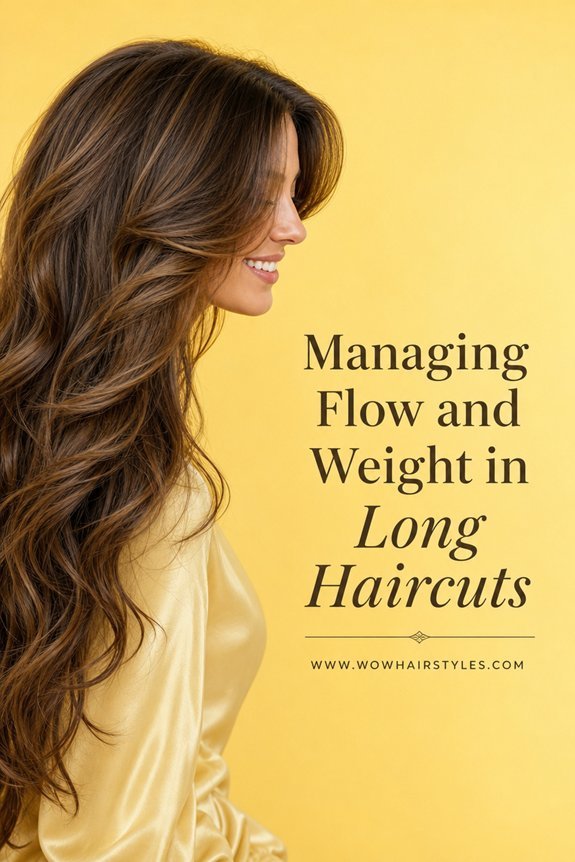
While long hair offers a dramatic silhouette, you’ll find that its sheer mass often threatens to pull the life out of your style. Without intentional structural intervention, gravity turns your mane into a heavy, monolithic block that lacks movement. To combat this, you must request strategic internal thinning. Stylists use techniques like point cutting or slithering to remove bulk from the mid-lengths without sacrificing your overall length.
This process creates invisible channels within the hair, allowing individual strands to slide past one another. You’ll notice that removing hidden weight instantly restores natural bounce and swing. If you desire a seamless look, incorporate long, blended layers that start below the chin. These tiers break up the surface area, preventing that dreaded “triangular” shape. By balancing the distribution of density, you guarantee your hair retains a light, airy flow that responds to your every movement.
Hair Measurement Terms Your Stylist Wants You to Know
Precision matters most when discussing internal geometry. Use the term “clearance” to describe the gap between your shortest layer and your jawline. When you request “point cutting,” you’re asking the stylist to snip vertically into the ends to reduce bulk without sacrificing length.
Don’t just say “short”; tell them you want your fringe to sit exactly at “brow-skimming” height. Mastering these measurements guarantees you walk out with the silhouette you envisioned. Clear terminology bridges the gap between your vision and your stylist’s shears.
How to Choose a Length Based on Maintenance Time?
Although long hair offers endless styling versatility, you’ll need to invest significant time into detangling and deep conditioning to keep those strands healthy. If your mornings feel rushed, waist-length locks won’t suit your lifestyle. You’ll spend hours blow-drying and heat styling just to achieve a polished look. Instead, consider a medium-length cut like a lob. This length balances style with efficiency, allowing you to air-dry or quickly style with minimal effort.
If you prefer a “wash-and-go” routine, short crops or pixie cuts offer the ultimate time-saving solution. You’ll slash your shower time and use fewer products daily. However, don’t forget that shorter styles require frequent trips to the salon—usually every four to six weeks—to maintain their precise shape. Evaluate your weekly schedule honestly before committing. Choose a length that fits your reality, not just your aesthetic goals, to make certain you love your hair every single day.
Matching Haircut Density to Your Natural Texture
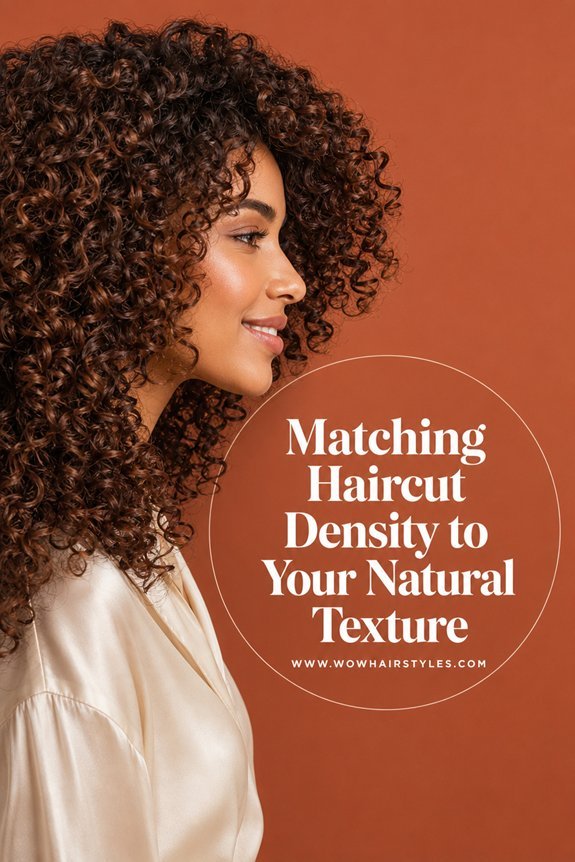
Because your hair’s density dictates how a cut actually moves, you’ve got to choose a style that works with your natural volume rather than fighting against it. If you have fine hair, you’ll want blunt edges that create an illusion of thickness. Avoid heavy layering, as it often makes thin ends look sparse and wispy.
Conversely, if you’re working with thick, coarse locks, you need internal layers to remove bulk. Without this thinning, your hair might form a triangular shape that feels unmanageable.
You should also consider your curl pattern. Tight coils require a strategic shape to prevent excessive width, while straight strands benefit from precision lines. Don’t ignore your scalp’s natural spacing; it determines whether a pixie cut looks chic or bare. By aligning your haircut’s structure with your hair’s physical mass, you make certain the silhouette stays balanced. You’ll save time styling when the cut honors your texture.
Pro Tips for Extending the Life of Your Trim
While you can’t stop your hair from growing, you can certainly delay the inevitable trip to the salon by adopting a proactive maintenance routine. You should prioritize moisture and protection to prevent split ends from traveling up the hair shaft. Friction remains your primary enemy, so swap your cotton pillowcase for silk or satin to minimize nighttime breakage. When you style your locks, keep heat settings low and always apply a defensive serum first. Chemical over-processing ruins your cut’s silhouette, so space out your color treatments. By respecting your ends, you’ll keep your shape looking fresh for weeks longer.
Consider these essential habits:
- Apply a deep conditioning mask weekly to fortify fragile tips.
- Use a wide-tooth comb on wet hair to avoid snapping delicate strands.
- Limit high-tension hairstyles like tight ponytails that cause mechanical damage.
Consistent care guarantees your style remains polished and your edges stay crisp.
Frequently Asked Questions
What Is the Average Monthly Cost of Professional Hair Product Subscriptions?
You might think subscriptions drain your wallet, but you’ll typically spend between $30 and $60 monthly for professional hair products.
This fee covers curated shampoos, conditioners, and styling treatments delivered to your door. You’re paying for convenience and high-end formulas that grocery stores don’t carry.
While some luxury boxes exceed $80, standard plans save you money. Don’t ignore the shipping costs, as they’ll often inflate your final monthly bill.
Which Vitamins and Supplements Are Medically Proven to Accelerate Hair Growth?
You’ll find that biotin, iron, and vitamin D effectively support your hair’s natural growth cycle. Studies show these nutrients strengthen follicles when you’ve got a deficiency.
You shouldn’t expect miracles if your levels are already normal, though. Zinc and marine collagen also help you maintain healthy strands.
Consult your doctor before you start any new regimen. They’ll confirm which supplements you actually need to see real, lasting results for your hair.
How Do Hormonal Changes During Pregnancy Affect Natural Hair Curl Patterns?
Your scalp becomes a chemical laboratory during pregnancy, rewriting your hair’s genetic code. Surging estrogen levels shield your follicles from shedding, while shifted androgen ratios reshape the bulb itself.
You’ll notice your natural curls loosening or tightening like a winding spring. Since hormones dictate the follicle’s structural blueprint, these shifts alter your strand’s cross-section.
You aren’t just imagining the change; your body’s internal chemistry is physically sculpting a brand-new texture.
What Are the Best Ways to Protect Hair Health While Swimming in Chlorine?
Drench your strands with fresh water before you plunge in.
Since your hair’s like a sponge, it won’t absorb as much harsh chlorine once it’s already saturated.
Slather on a leave-in conditioner or natural oil to create a waterproof barrier.
You’ll also want to wear a snug silicone cap for extra safety.
Afterward, wash immediately with a clarifying shampoo to strip away chemicals and restore your hair’s natural shine.
How Can I Safely Switch Between Permanent Hair Color Shades at Home?
Start by selecting a shade within two levels of your current color to avoid patchiness. You’ll need a clarifying shampoo to strip old pigment before applying new dye. Don’t skip the strand test; it reveals how the chemicals react with your specific undertones.
Apply a barrier cream around your hairline, then saturate your locks evenly. If you’re going markedly lighter, you’ll likely require professional help to prevent irreversible chemical damage.
Conclusion
Your hair is the architecture of your identity, so don’t settle for a blueprint that doesn’t fit your life. Whether you’re buzzing it all off or cultivating a flowing mane, you now have the tools to communicate with your stylist like a pro. Choose a length that honors your texture and schedule. Treat your hair like a garden; with the right shape and consistent tending, your personal style will always be in bloom.
