Identify your hair’s unique needs by using the Andre Walker scale to classify your strands from Type 1 straight to Type 4 coily. Use the float test to check porosity, which determines if you need heat-activated humectants or lipid-heavy sealants. Don’t forget to measure density to choose the right product viscosity and tool temperatures. Customizing your regimen based on climate and protein needs prevents damage. You’re just moments away from mastering a professional-grade routine.
Key Takeaways
- Use the Andre Walker system to classify hair into four types: Type 1 (straight), Type 2 (wavy), Type 3 (curly), and Type 4 (coily).
- Determine porosity using the float test to select appropriate moisture treatments, such as heat for low porosity or heavy creams for high porosity.
- Assess hair density and strand diameter to choose between lightweight mousses for fine hair or rich oils for thicker manes.
- Implement a monthly maintenance routine using clarifying chelating shampoos to remove mineral buildup and restore natural shine and texture.
- Protect hair integrity by limiting hot tool usage, applying professional-grade heat protectants, and adjusting styling routines for seasonal weather changes.
Decode Your Hair Type With the Andre Walker Scale
Because your hair’s unique behavior dictates which products and styling techniques work best, understanding the Andre Walker Hair Typing System is the first step toward a better routine. Oprah Winfrey’s longtime stylist created this legendary numerical scale to help you categorize strands based on their natural shape and diameter.
You’ll find that the system simplifies the overwhelming world of hair care by grouping textures into four primary categories. Each number represents a distinct silhouette, while alphabetical subcategories offer a more granular look at the width of your waves or coils.
Identify Your Curl Pattern From Type 1 to Type 4
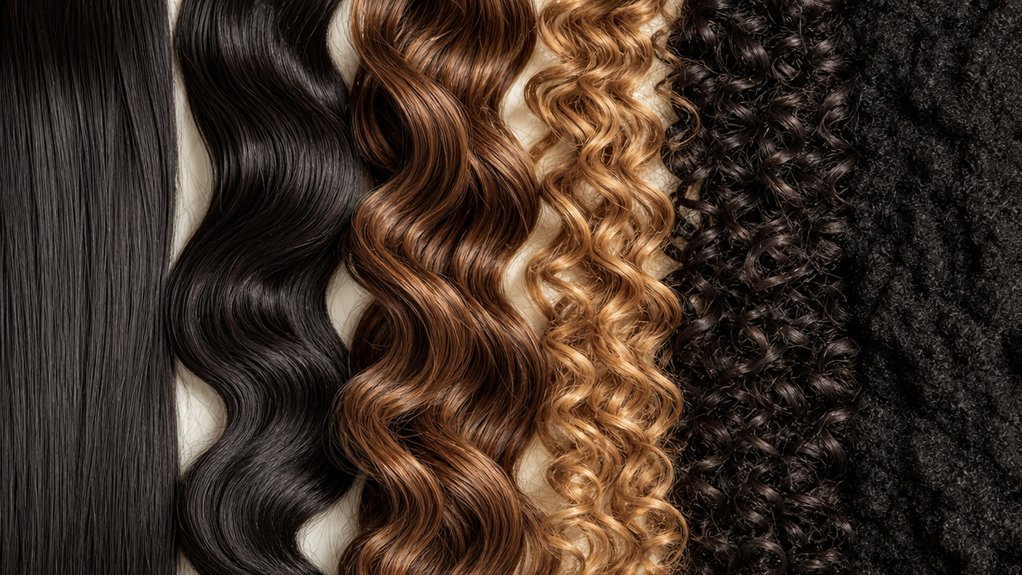
You’ll use the Andre Walker System to categorize your strands into four distinct groups based on their natural shape. Examine your hair’s visual pattern characteristics to see if you have straight, wavy, curly, or coily locks. Once you’ve pinpointed your specific number and letter, you’ll know exactly how to manage your unique texture.
The Andre Walker System
While hair varies markedly from person to person, the Andre Walker Hair Typing System offers the most widely recognized framework for categorizing these differences into four distinct groups. You’ll find this numerical method helps you navigate the complex world of hair care products by narrowing down your specific needs.
Created by Oprah Winfrey’s longtime stylist, the system assigns a number from one to four based on your primary strand shape.
You’ll categorize straight strands as Type 1, wavy locks as Type 2, curly manes as Type 3, and coily textures as Type 4. Most people also use alphabetical subcategories to refine their classification further.
Visual Pattern Characteristics
Identifying your specific curl pattern requires a close look at the shape your strands take when they’re free of heavy styling products. You’ll categorize your mane into four distinct groups. Type 1 remains pin-straight, reflecting light with ease because it lacks any visible curve.
If you notice gentle S-shaped bends, you’re rocking Type 2 waves. These strands lie closer to the scalp and don’t quite spiral.
Type 3 hair forms defined loops or springy corkscrews that boast significant volume and bounce.
Finally, if your hair creates tight zig-zags or compact coils that shrink when dry, you’ve got Type 4 texture. Don’t worry if you spot multiple patterns across your head; it’s completely normal. Understanding these visual cues helps you choose the right products for your unique needs.
Measure Hair Porosity to Manage Moisture Retention
You’ll start by performing the float test to see how easily your strands absorb water.
Once you’ve observed the results, interpret them to determine if your hair has low, medium, or high porosity.
Understanding these findings helps you tailor a hydration routine that’ll keep your hair healthy and moisturized.
Perform The Float Test
To figure out how your strands handle moisture, you can fall back on the float test to gauge hair porosity. This simple DIY assessment requires only a few minutes and basic household items.
First, you’ll need to wash your hair thoroughly to remove any heavy products, oils, or silicone buildup that might skew the results. Once your hair is completely dry, pluck a few clean strands from different areas of your head, like the crown and the nape.
Fill a clear glass with room-temperature water and gently place the strands on the surface. Make sure you aren’t pushing them down; just let them rest naturally on top.
Now, you’ll set a timer for five minutes. Don’t disturb the glass while you wait for the water to interact with your hair.
Interpret Your Results
Once the timer dings, look closely at where your strands settled in the glass to determine their porosity level. If your hair stays floating on the surface, you’ve got low porosity. Your cuticles are tightly closed, resisting water but retaining it well once absorbed. Use heat during deep conditioning to open those scales.
If the strands drift toward the middle, you’ve reached the gold standard of medium porosity. Your hair absorbs and maintains moisture effortlessly, requiring minimal maintenance.
However, if the hair sinks quickly to the bottom, you have high porosity. Gaps in your cuticles allow moisture in fast, but it escapes just as quickly, leaving hair dry. Apply heavy creams or oils to seal those holes. Now, you can tailor your product choice to your specific needs.
Determine Hair Density for Smarter Styling Choices
Understanding your hair’s density often changes how you approach every part of your styling routine, from product selection to cutting techniques. While texture refers to individual strand thickness, density measures the number of strands per square inch on your scalp. You’ll easily identify your category with a simple mirror test. Pull a section of dry hair aside; if you see your scalp clearly, you have low density. If the skin’s barely visible, you’re in the medium range. If your scalp remains completely hidden, you possess high density.
This knowledge dictates how you manage volume and weight. Low-density hair needs blunt cuts to create the illusion of fullness, whereas high-density manes benefit from long layers to remove excess bulk. You don’t want heavy styles weighing down thin patches or excessive frizz puffing out thick sections. Master this measurement to make certain your haircut complements your natural volume perfectly every single day.
Select the Best Products for Your Specific Texture
Since you’ve already identified your hair’s physical traits, you can now match your strands with the specific formulas they need to thrive. Choosing the wrong product often leads to limp locks or brittle breakage. If you have fine hair, don’t weigh it down with heavy butters; instead, grab lightweight volumizing mousses. For those with coarse, thick manes, rich creams and oils provide the essential slip you need to detangle without damage. High-porosity hair craves protein-rich leave-ins to seal the cuticle, while low-porosity strands benefit from humectants that draw moisture in.
Match your product’s viscosity to your hair’s diameter, choosing lightweight mousses for fine strands and rich oils for thick, coarse manes.
Consider these essentials for your kit:
- Water-based mists for revitalizing curls without buildup.
- Clarifying shampoos to remove stubborn residue from styling waxes.
- Chelating rinses to neutralize mineral deposits on dull strands.
You’ll notice an immediate difference when your product’s viscosity aligns with your hair’s diameter. Trust your assessment and invest in ingredients that respect your unique biological blueprint.
Customize Your Routine Based on Environmental Factors
Although your genetic makeup dictates your hair’s base needs, external elements like humidity and UV exposure constantly shift how your strands behave. When you step into humid air, porous cuticles soak up moisture, causing immediate frizz and volume expansion. You’ll need anti-humectants or lightweight oils to seal the shaft and block excess water.
Conversely, arid climates suck moisture from your hair, leaving it brittle and prone to breakage. In these dry zones, you should switch to heavy leave-in conditioners and water-binding humectants to lock in hydration.
Don’t ignore the sun’s impact on your hair’s structural integrity. Harsh UV rays degrade proteins and fade color, so you must apply products containing UV filters before spending time outdoors. Wind also poses a threat by creating tangles that lead to mechanical damage. You can minimize this by wearing protective styles or silk scarves when it’s blustery. Adjusting your regimen guarantees your hair remains resilient.
Protect Your Natural Hair Type From Heat Damage
While environmental factors wear down your strands over time, high temperatures from styling tools can cause immediate, permanent structural changes.
Environmental stressors erode hair gradually, yet excessive heat inflicts instant and irreversible damage to your strand’s internal structure.
You risk melting the keratin proteins that give your hair its unique bounce and strength. When you apply direct heat without a barrier, you’re effectively stripping the moisture from the cortex, leaving your cuticle frayed and vulnerable. To maintain your integrity, you must prioritize defense before your iron touches a single strand.
- Always apply a professional-grade heat protectant to create a thermal seal.
- Lower your tool’s temperature setting to match your specific hair density.
- Limit hot tool usage to once weekly to prevent cumulative fiber degradation.
Don’t ignore the warning signs of scorched ends. You’ll notice your curl pattern loosening or your straight strands becoming brittle.
Solve Common Texture Issues With Targeted Treatments
Because various texture concerns often stem from internal imbalances, you’ll need specific formulations to restore your hair’s natural rhythm. If your strands feel brittle, don’t just coat them in silicone. Instead, apply a protein-rich bond builder to repair the structural cortex. High-porosity hair craves acidic rinses to seal raised cuticles, while low-porosity types require humectants like glycerin combined with gentle heat to allow moisture penetration.
When frizz disrupts your pattern, choose lipid-heavy masks that mimic your scalp’s sebum. These treatments fill gaps in the hair shaft, preventing humidity from swelling the fiber. If you struggle with lackluster shine, incorporate clarifying chelating shampoos once a month to strip away mineral buildup that masks your true texture.
You’re not stuck with lackluster locks; you’re simply waiting for the right ingredients. By matching your treatment to your specific porosity and elasticity needs, you’ll transform dull, unmanageable hair into a vibrant, healthy masterpiece.
Frequently Asked Questions
Can Hormonal Changes or Pregnancy Permanently Alter My Natural Hair Texture?
Significant hormonal shifts during pregnancy or menopause definitely transform your natural hair texture permanently.
You’ll notice your follicles changing shape as estrogen levels fluctuate, potentially turning straight strands curly or making coarse locks fine.
These biological triggers alter your scalp’s chemistry and growth cycles forever.
While you can’t reverse these genetic switches once they flip, you’ll adapt your routine to manage the new pattern your body’s created for you.
Does My Scalp’s Oil Production Affect My Overall Hair Type Classification?
Don’t worry; oily roots won’t change your DNA or fundamental hair structure.
While you might feel like grease defines your mane, your scalp’s oil production doesn’t shift your hair type classification. It solely determines your scalp condition.
You’re still wavy, curly, or straight regardless of sebum levels. Focus on how your strands bend instead of how fast they get shiny.
You’ll find that managing oils only reveals your true pattern.
How Often Does Hair Texture Naturally Change as a Person Ages?
You’ll likely notice significant shifts in your hair’s texture every seven years. Hormonal fluctuations during puberty, pregnancy, and menopause rewrite your strands’ genetic instructions, altering their diameter and shape.
As you grow older, your follicles shrink, producing finer, thinner hairs that feel different to the touch. You’ll also see graying hairs change from soft to wiry. Your body’s changing chemistry guarantees your mane won’t stay the same throughout your entire life.
Can Specific Dietary Deficiencies Cause a Noticeable Change in Curl Pattern?
You damage your follicles, you weaken your strands, and you ruin your curl pattern when you ignore nutrition.
You’ll notice your bouncy coils suddenly drooping or thinning because your body lacks essential proteins and minerals.
Zinc, iron, and biotin deficiencies literally restructure your hair’s internal bonds.
If you don’t fuel your scalp properly, you’ll lose that natural definition.
Eat balanced meals to protect your texture and maintain your hair’s health.
Does the pH Level of Water Impact Hair Texture Over Time?
You’ll notice alkaline water swells your hair’s cuticle, making strands feel rough and prone to tangles.
If you consistently wash with hard, high-pH water, you’re stripping away natural oils and weakening the protein structure.
This process transforms soft curls into brittle, frizzy messes over time.
You’ve got to balance your scalp’s acidity to maintain smoothness.
Don’t let mineral buildup ruin your texture; use an acidic rinse to restore shine.
Conclusion
Don’t let your mane be a mystery you can’t solve. By decoding your pattern and porosity, you’ve handed yourself the keys to a kingdom of healthy strands. Treat your routine like a tailored suit; it should fit your hair’s unique needs perfectly. When you feed your curls the right moisture, they’ll bloom like a desert after rain. Now, step out and let your radiant, resilient crown do all the talking.