
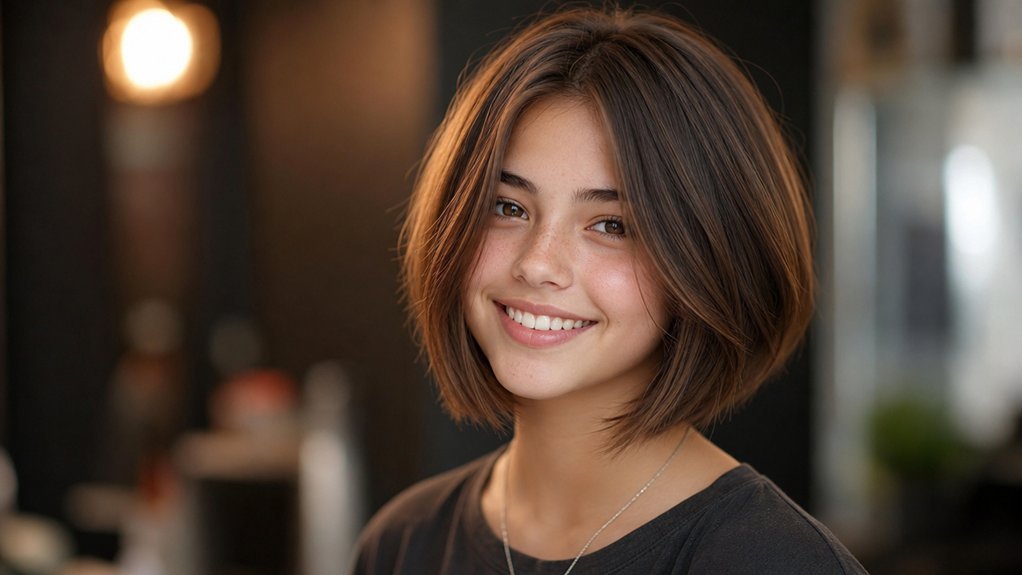
You’ll save hours each morning by matching your child’s texture and face shape to a self-managing cut. Choose tapered buzz cuts or layered bobs for active toddlers to resist tangles. For school days, master sixty-second ponytails using snag-free elastics and detangling sprays. Teens can opt for trendy butterfly cuts or textured crops. Always prioritize sulfate-free, plant-based products for sensitive scalps. Following these expert strategies guarantees your family stays stylish while simplifying your daily routine.
Key Takeaways
- Select low-maintenance cuts like tapered buzzes or textured pixies to minimize tangles and daily styling time for active toddlers.
- Master efficient school morning routines by using detangling sprays, wide-tooth combs, and pre-packed accessory kits for quick styling.
- Secure high ponytails using double elastics and alcohol-free gels to ensure hairstyles remain intact during physical school activities.
- Choose trending teen styles like textured crops for boys or voluminous butterfly cuts and curtain bangs for girls.
- Match haircuts to specific face shapes and hair textures, utilizing internal layers for thick hair or blunt cuts for volume.
Best Low-Maintenance Haircuts for Active Toddlers
Wrangling an energetic toddler into a stylist’s chair is a feat in itself, so you’ll want a cut that lasts longer than a week.
Since toddlers rarely sit still for styling, you need a durable haircut that survives their constant motion.
A classic tapered buzz cut offers the ultimate freedom for little ones who won’t sit still for daily brushing. You’ll love how it hides messy bedhead and resists tangles during sandbox play.
If you prefer more length, choose a textured pixie or a short bob with soft layers. These styles keep strands away from curious eyes and tiny mouths without needing constant hair ties.
You’ll find that shaggy, layered cuts disguise uneven growth well, extending the time between salon visits. Ask your stylist for blunt ends to prevent split ends from fraying quickly.
Since toddlers constantly rub their heads against car seats and pillows, these durable shapes maintain their integrity. You’re choosing styles that prioritize movement and comfort, ensuring your child stays focused on play rather than hair.
Practical School-Ready Hairstyles for Elementary Kids
You’ll conquer the morning rush by mastering quick braid techniques and secure high ponytails that stay put all day.
Use time-saving accessory tips to add flair without sacrificing your precious minutes before the bus arrives.
These practical styles guarantee your child looks polished and feels confident for every classroom activity.
Quick Morning Braid Techniques
Getting kids ready for the bus often turns into a race against the clock, but you don’t have to sacrifice style for speed. Master the three-strand side braid to keep hair tidy all day.
You’ll simply gather the hair over one shoulder, divide it into three equal sections, and cross the outer pieces over the middle. Secure the end with a colorful elastic for a playful touch.
If you’re dealing with shorter layers, try a half-up crown braid. Just weave the top section of hair and leave the rest flowing. This method keeps flyaways out of your child’s eyes during lessons.
Use a detangling spray first to make the strands glide smoothly. These brisk techniques guarantee your kid looks polished and stays comfortable from first bell to dismissal.
Secure High Ponytail Styles
Active children need hair that stays put through recess and gym class, making the high ponytail a reliable upgrade from simple braids. You’ll find that gravity and constant movement often loosen standard ties, so you must build a sturdier foundation. Start by misting the hair with water or a light detangler to smooth out flyaways before gathering it at the crown.
To make certain the style lasts until the final bell rings, you should implement these structural techniques:
- Use two snag-free elastics for double the tension and support.
- Incorporate a small hidden braid within the base to prevent sagging.
- Apply a tiny amount of alcohol-free gel to the hairline.
- Finish with a wrap-around hair strand to hide the elastic securely.
These methods keep your child looking polished and ready for any physical activity.
Time-Saving Accessory Tips
Many parents find that strategic accessories can transform a chaotic morning routine into a streamlined process. You don’t need complex braiding skills when you use wide fabric headbands to instantly manage unruly flyaways. These bands keep hair out of your child’s eyes during gym class while hiding messy parts.
If you’re dealing with stubborn tangles, reach for oversized scrunchies. They provide a secure hold without causing the breakage typical of thin elastics.
You’ll also save minutes by swapping intricate pins for snap clips. These clips secure loose strands in seconds, guarantee the style lasts until the final bell rings.
Keep a pre-packed kit of color-coordinated bows near the door. You’ll simplify your mornings, boost your kid’s confidence, and assure they look polished with minimal effort every single day.
Popular Teen Haircut Trends for Boys and Girls
You’ll find that today’s teen fashion moves fast, so you need a look that captures your unique personality. Explore modern cuts for boys like textured fades and messy quiffs that bring an effortless edge to your daily routine. You can also embrace trendy styles for girls, ranging from chic wolf cuts to blunt bobs, to make sure you’re always leading the pack.
Modern Cuts For Boys
Boys’ hair trends currently prioritize texture and sharp contrasts to reflect personal style. You’ll notice that modern barbers rely on disconnected lengths to create visual impact.
Whether you’re aiming for a polished look or something more rugged, these styles offer versatility for every hair type. You don’t need excessive products to keep these shapes looking fresh daily.
Consider these top selections for your next changeover:
- The Textured Crop: Short sides paired with a choppy, layered top for a messy yet intentional finish.
- Low Taper Fade: A subtle shift that keeps the edges clean while maintaining length around the crown.
- Classic Pompadour: A timeless choice that uses volume to create a sophisticated, bold silhouette.
- Burst Fade: A creative arc around the ears that highlights natural curls or waves perfectly.
Trendy Styles For Girls
While classic long layers remain a staple, today’s trends for girls lean toward bold shapes and effortless movement that showcase individual flair.
You’ll notice the “butterfly cut” dominating social feeds, blending short face-framing layers with longer lengths for maximum volume.
If you prefer a shorter look, the blunt bob offers a chic, low-maintenance alternative that hits right at the jawline.
For those embracing natural textures, the wolf cut provides a shaggy, rebellious edge that’s easy to style with just a bit of sea salt spray.
Don’t overlook the power of curtain bangs; they instantly soften your features and pair perfectly with high ponytails.
Whether you’re choosing vibrant money-piece highlights or a sleek, one-length chop, these contemporary styles make sure you’ll feel confident and stylish throughout the school year.
Choose the Right Haircut for Your Child’s Face Shape
How can you guarantee your child’s next haircut looks great from every angle? You must first identify their unique face shape to find a balanced silhouette. While a style might look trendy on a celebrity, it won’t always suit your child’s specific proportions. By matching the cut to their bone structure, you highlight their best features and create harmony.
To guarantee a great haircut, identify your child’s unique face shape to find a silhouette that balances their specific proportions and bone structure.
Consider these strategic pairing tips for common shapes:
- Round: Select styles with height or long layers to elongate the appearance.
- Square: Pick soft, wispy fringes or side-swept bangs to neutralize a strong jawline.
- Oval: Experiment with almost any length since this versatile shape handles most styles.
- Heart: Choose chin-length bobs or volume near the bottom to balance a wider forehead.
Don’t just follow the latest fads. Instead, look into the mirror together and observe the forehead width and chin line. Picking a flattering geometry make sure they’ll feel confident every day.
Manage Thick, Curly, or Fine Hair Textures With Ease
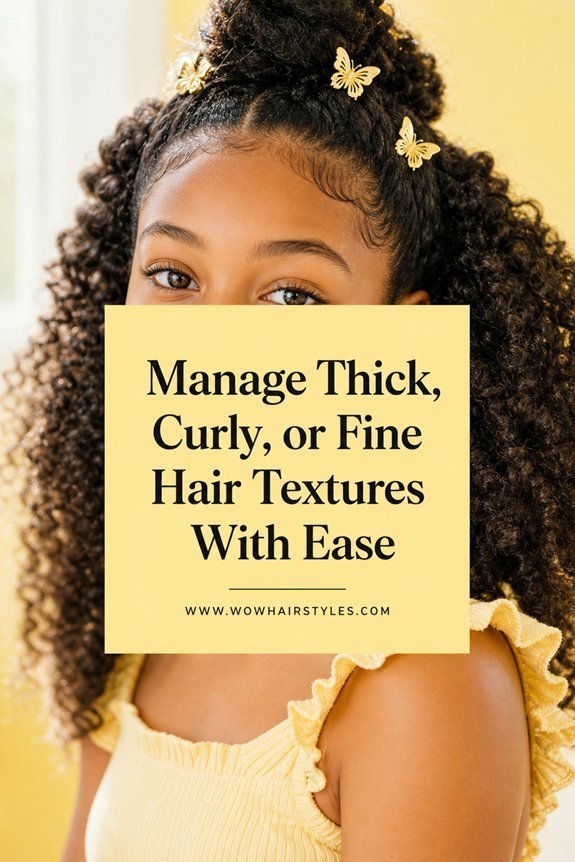
Every hair type presents its own set of challenges, so you’ll need specific techniques to keep your child’s locks manageable and healthy.
If your teen deals with thick hair, request internal layers from the stylist to remove bulk without sacrificing length. You’ll find that braiding thick sections before bed prevents morning tangles and simplifies the routine. For curly hair, stop using standard brushes immediately. Instead, use a wide-tooth comb while the hair stays wet to preserve the natural curl pattern and prevent frizz.
If your child has fine hair, avoid heavy styling oils that weigh strands down. Stick to blunt cuts, as these create an illusion of thickness and volume. You should also dry fine hair gently with a microfiber towel rather than rubbing it vigorously.
Must-Have Hair Products for Sensitive Young Scalps
Since a child’s skin is more permeable than an adult’s, you’ll need to choose hair products that prioritize purity over synthetic fragrances. Harsh chemicals quickly irritate delicate follicles, leading to itching or redness. You should swap standard bottles for plant-based formulas that cleanse without stripping natural oils. Look for tear-free shampoos and lightweight conditioners that use botanical extracts to soothe the scalp.
To make certain your child’s safety, keep these essential criteria in mind:
- Select sulfate-free formulas to maintain moisture balance.
- Check labels for hypoallergenic certifications to avoid reactions.
- Prioritize fragrance-free options to prevent contact dermatitis.
- Choose pH-balanced products that match the scalp’s natural acidity.
It’s best to avoid parabens and phthalates entirely. These additives don’t offer styling benefits and often trigger sensitivities. By investing in gentle, high-quality ingredients, you’re protecting their long-term hair health. A thoughtful routine transforms bath time into a soothing, pain-free experience for everyone involved.
How to Talk to Your Kid’s Stylist Before the First Cut?
While the first trip to the salon feels like a major milestone, it’s often a source of anxiety for both you and your little one. You must communicate clearly with the stylist to guarantee a smooth experience. Start by discussing your child’s temperament and any sensory sensitivities, like a fear of loud clippers or itchy capes. Bring reference photos to show the exact length and shape you desire, as “just a trim” means different things to different people.
Ask the professional how they handle wiggly toddlers or sudden tears. Establish a game plan for breaks if your child becomes overwhelmed. Don’t forget to mention cowlicks or natural growth patterns that affect how the hair sits. By providing these details upfront, you create a partnership that prioritizes your child’s comfort. Trust their expertise, but stay vocal about your expectations to walk away with a cut you both love.
Morning Styling Tips to Speed Up Your School Routine
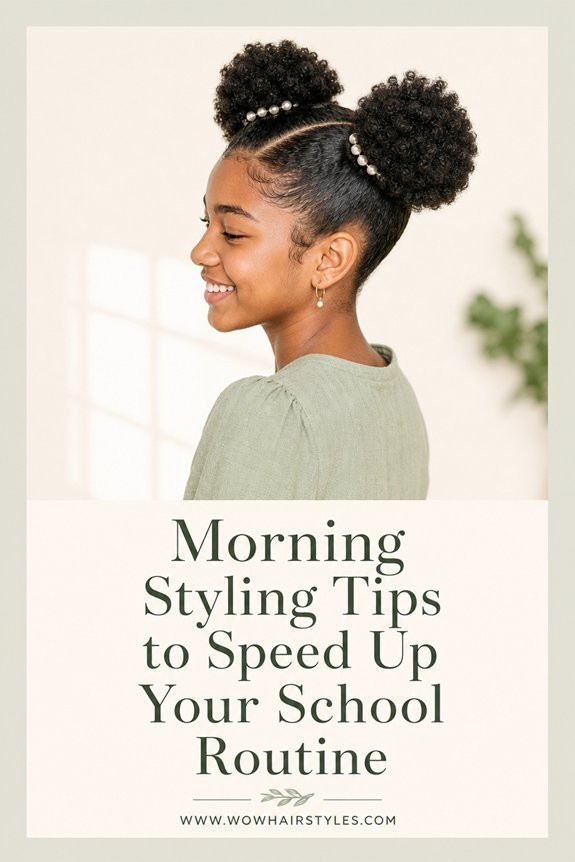
Maneuvering the chaotic rush before the bus arrives usually requires a strategic approach to your child’s hair. You don’t need complex updos when minutes matter. Instead, focus on efficiency by prepping the night before. Spritzing a leave-in conditioner before bed prevents those stubborn morning birds’ nests. If you’re dealing with long hair, a loose braid at night keeps strands contained and cuts down on detangling time once the sun rises.
Keep your primary tools in one accessible bin so you aren’t hunting for elastics. Streamline your process with these quick habits:
- Use a wide-tooth comb to work through knots starting from the ends.
- Apply a lightweight detangling spray to provide immediate slip.
- Master a sixty-second ponytail or a sleek headband look.
- Set out accessories the previous evening to match their outfit.
Maintaining a consistent rhythm reduces stress. You’ll transform a frantic morning into a smooth shift for everyone involved.
Frequently Asked Questions
How Often Should Children Get Their Hair Trimmed to Maintain Healthy Growth?
Trim your child’s hair every eight to twelve weeks to prevent split ends from traveling up the shaft. You don’t need frequent cuts for length, but regular maintenance guarantees their locks stay strong and manageable.
If they use heat tools or swim often, schedule appointments sooner. You’ll notice smoother textures and fewer tangles when you stick to this routine.
Consistency keeps their hair looking vibrant while encouraging steady, healthy growth.
What Are the Best Ways to Remove Gum or Slime From Kids’ Hair?
Apply peanut butter or olive oil directly to the sticky mess. You’ll need the fats to break down the adhesive’s bond. Rub the substance in gently until the gum slides right off the strands.
If you’re dealing with stubborn slime, soak the hair in warm vinegar instead. It dissolves the polymers instantly.
You shouldn’t pull or tug, as that causes pain. Just rinse with shampoo once the gunk’s gone.
At What Age Can I Safely Start Using Permanent Hair Dye on Teens?
Wait until your seedling’s trunk hardens before painting its bark with heavy chemicals. You shouldn’t apply permanent dye until they’re at least sixteen.
Their young, porous hair absorbs toxins quickly, risking severe allergic reactions or chemical burns. Stick to temporary chalks or semi-permanent tints for now.
Once they reach late adolescence, their scalp’s protective barrier matures. You’ll guarantee their safety by waiting, protecting their natural health while they grow.
How Do I Help My Child Overcome a Fear of Loud Hair Clippers?
Introduce the trimmer’s sound at home before you visit a barber.
You’ll desensitize your child by letting them touch the vibrating handle while it’s running.
Don’t rush the process; start with short sessions near their ears.
Use positive reinforcement and offer rewards for bravery.
You shouldn’t force the haircut if they’re panicked.
Instead, buy quiet clippers designed for sensitive ears.
Your patience builds their confidence and reduces future anxiety.
Which Hairstyles Are Safest for Preventing Head Lice at School?
Tight braids, high buns, and slicked-back ponytails provide the best defense against lice. You’ll stop these pests from crawling between heads by keeping your child’s hair contained and close to the scalp. Don’t leave loose strands or flyaways for bugs to grab.
You’re effectively removing the “bridges” lice use for travel. Use firm hairspray or gel to create a smooth barrier that makes it harder for insects to attach.
Conclusion
Style shouldn’t be a struggle. From playful pixies to bold buzzcuts, you’ve now got the tools to tackle any tangled tresses. Whether you’re managing messy manes or seeking sleek styles, remember that confidence is the best accessory. Don’t dread the daily dash; just pick a practical, pretty look that pops. You’ll save time, skip the stress, and see your superstar shine. Grab your gear and get grooming for a gorgeous, great-hair day!