
To find your ideal style, start by measuring your forehead and jawline to identify your face shape. Whether you prefer a professional crew cut or a textured quiff, match the length to your hair’s natural thickness. Use matte clay for rugged volume or pomade for a polished finish. Always bring reference photos and specify your taper using clipper guard numbers. Master these fundamentals to make certain you walk out of the barbershop with total confidence.
Key Takeaways
- Identify your face shape by measuring your forehead, cheekbones, and jawline to select the most flattering haircut for your proportions.
- Choose styles based on hair texture, such as crew cuts for thick hair or shorter blunt cuts for fine hair.
- Bring multiple high-quality reference photos to consultations to clearly communicate desired lengths, textures, and specific nape finishes to your barber.
- Use appropriate products like matte clay for rugged texture or high-shine pomade for structured, classic silhouettes.
- Master daily styling by warming products between palms and applying from back to front to ensure even distribution and volume.
Identify Your Face Shape for the Best Haircut
Before you settle on a specific look, you’ll need to figure out which category your bone structure falls into. Grab a flexible measuring tape and stand before a mirror. Measure your forehead width, cheekbones, jawline, and face length. If your length and width are nearly equal with a rounded jaw, you’ve got a round face. An oval shape features a length greater than the cheekbone width, while a square face boasts a sharp, angular jawline.
Don’t ignore the nuances of a heart or diamond shape either. A heart face tapers to a pointed chin, whereas a diamond shape highlights wide cheekbones with a narrower forehead and chin. Once you’ve identified these proportions, you’ll easily spot which styles balance your features. You’re aiming to create symmetry by adding volume or texture in the right spots. Knowing your geometry guarantees you don’t pick a cut that clashes with your natural lines.
Classic Short Hairstyles for a Professional Look
The timeless appeal of a well-executed crew cut or side part guarantees you’ll always look polished in the boardroom. These styles offer a sharp, disciplined silhouette that communicates confidence and attention to detail.
When you choose a crew cut, you opt for a low-maintenance look that emphasizes your facial features through tapered sides and a slightly longer top. It’s the ultimate choice for a busy professional who values efficiency without sacrificing elegance.
If you prefer more structure, the classic side part remains the gold standard of corporate grooming. You simply define a clean line and sweep the hair across for an instantly sophisticated finish.
Use a light pomade to keep every strand in place throughout your workday. These short, refined cuts make certain you remain well-groomed from your morning coffee to late-night meetings. Stick to these traditional foundations to maintain a powerful, authoritative presence in any professional environment.
Modern Textured Cuts for Medium-Length Hair
While classic styles command authority, modern textured cuts offer a relaxed versatility that lets you showcase more personality. You’ll achieve this look by asking your barber for internal layers. These layers remove bulk without sacrificing the length you’ve worked hard to grow. By thinning the ends with point-cutting techniques, your stylist creates a rugged, lived-in feel that doesn’t look over-engineered.
You don’t need a complex routine to maintain this aesthetic. Instead, work a nickel-sized amount of matte clay or sea salt spray through damp strands. Use your fingers to lift the roots and define individual sections. This approach emphasizes natural movement rather than stiff perfection. It bridges the gap between formal office standards and casual weekend vibes perfectly. Whether you choose a textured quiff or a messy fringe, you’re controlling the volume while embracing a bit of controlled chaos. It’s a smart, contemporary way to handle medium hair.
How to Style Long Hair Without Looking Messy
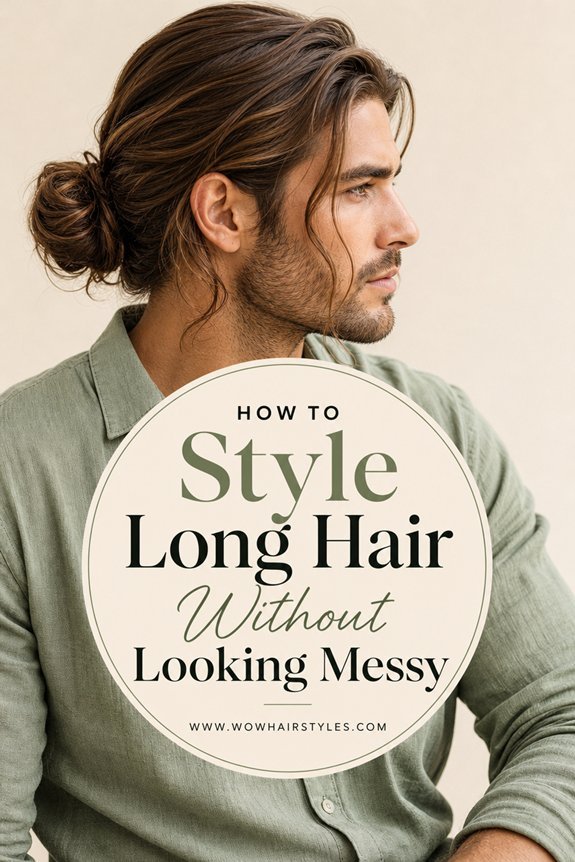
Growing your hair out often leads to a struggle between intentional length and unkempt clutter. To maintain a polished appearance, you’ve got to master control through proper technique and product selection. Abandon the “woke up like this” mentality and embrace these strategic steps to guarantee your mane reflects sophistication rather than neglect:
- Apply a lightweight leave-in conditioner to damp strands to eliminate frizz and flyaways instantly.
- Use a wide-tooth comb to distribute natural oils, preventing tangles that cause a disheveled look.
- Secure your hair in a neat, mid-height bun or sleek ponytail using snag-free elastics for a sharp silhouette.
You shouldn’t let stray hairs dictate your style. By smoothing the cuticle and defining your natural texture, you create a deliberate aesthetic. Focus on clean lines around your face and neck. When you manage the volume effectively, you transform wild growth into a refined, professional statement that commands respect.
Choose the Right Haircut for Your Specific Hair Type
Nailing down a look that actually works requires you to stop fighting your natural texture and start working with it. If you’ve got thick, straight strands, you’ll benefit from a classic pompadour or a textured crop that adds necessary movement. Fine hair, however, demands more strategic cuts. Opt for shorter, blunter styles like a crew cut to create an illusion of density and volume.
For those with wavy hair, keep the sides tight and leave more length on top to showcase your natural flow. If you’re rocking tight curls or coils, a well-executed fade or a rounded shape maintains control while highlighting your unique pattern. Don’t try to force a style that contradicts your hair’s inherent behavior. Consult your barber about how your hair grows and where its weight sits. By aligning your haircut with your specific hair type, you’ll make sure your daily routine remains effortless and your aesthetic stays sharp.
Essential Styling Products Every Man Should Own
You’ll need the right tools to keep your new haircut looking sharp throughout the day. Start your collection with a versatile matte clay for natural volume or a high-shine pomade for a polished, classic finish.
You should also grab a texturizing sea salt spray to add effortless movement and grit to your routine.
Versatile Matte Hair Clay
Modern men frequently reach for matte hair clay when they need a reliable, high-hold product that doesn’t leave a greasy shine. You’ll love how this mineral-rich formula adds gritty texture and incredible volume without weighing your strands down.
It’s perfect for achieving that effortless, “woke up like this” aesthetic while maintaining control throughout your busiest days.
To master the application, follow these simple steps:
- Scoop a pea-sized amount and rub it vigorously between your palms to warm the clay.
- Apply the product evenly through damp or dry hair, starting from the roots.
- Use your fingers to sculpt your desired shape for a natural, flat finish.
Whether you’re rocking a messy quiff or a textured crop, this versatile tool guarantees your style stays sharp and shine-free.
High Shine Styling Pomade
A classic high-shine pomade serves as the gold standard for achieving a polished, sophisticated look that demands attention. You’ll find this oil or water-based product indispensable when crafting timeless styles like the pompadour, slick back, or side part.
It offers a firm hold that keeps every hair in place throughout your busiest days. Unlike drier alternatives, it imparts a sleek, reflective finish that radiates health and elegance.
You don’t need much; a dime-sized amount worked through damp hair provides maximum control and luster. It’s the perfect choice for formal events or professional settings where you want to project confidence.
Whether you’re channeling vintage Hollywood vibes or modern executive sharpest, this staple guarantees you look dapper. You’ll appreciate how it tames flyaways while maintaining a smooth, wet-look texture.
Texturizing Sea Salt Spray
Several spritzes of sea salt spray offer the quickest way to achieve that effortless, wind-swept volume synonymous with a day at the beach. You don’t need a coastline to replicate this gritty, matte finish; you just need the right technique. The formula’s saline minerals absorb excess oils while adding grip to flat strands, making it a versatile tool for guys with thin or wavy hair.
Follow these steps for the best results:
- Mist the product onto damp roots to create a foundation.
- Scrunch your hair upward to encourage natural movement.
- Air dry for a casual look or blow-dry for massive lift.
It provides a light hold that won’t leave your scalp feeling crunchy or greasy. You’ll gain instant definition and a rugged texture that lasts all day.
How to Talk to Your Barber Like a Pro
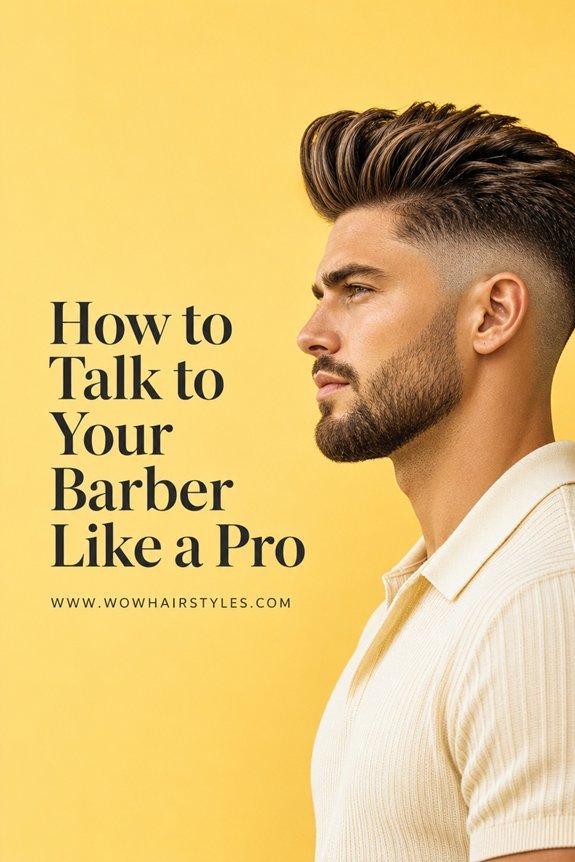
Mastering a few key terms guarantees you don’t leave the chair with a cut you’ll regret.
You should bring clear reference photos and specify your preferred taper length to eliminate any guesswork.
Use these professional communication strategies to get exactly the look you’ve envisioned.
Learn Essential Hair Terminology
Walking into a barbershop without the right vocabulary often leads to a haircut that falls short of your expectations. You shouldn’t just hope for the best; instead, master these specific terms to guarantee you and your barber speak the same language. Precision matters when you’re describing how you want your hair to lay and blend.
- Taper: This gradually shortens your hair length from the top down to the natural hairline.
- Texture: Request this if you want a deconstructed, messy look rather than a flat, uniform surface.
- Nape: Specify a “blocked” finish for a squared edge or a “tapered” finish for a natural, faded look at the neck.
Using these technical terms eliminates guesswork. You’ll command the chair with confidence and leave with a sharp, intentional style.
Bring Clear Visual References
While technical terms build a solid foundation, even the best vocabulary can’t match the clarity of a high-quality photo. You’ll avoid costly misunderstandings by showing your barber exactly what you envision. Save at least three images that showcase the style from different angles—front, side, and back. Choose models with a similar hair texture and thickness to yours, as a fine-haired man can’t easily replicate a thick, curly quiff.
Don’t just flash your phone screen; point out specific elements you like, such as the fringe length or the top’s texture. This visual aid bridges the gap between your imagination and their expertise. It gives your barber a concrete blueprint, ensuring you both share the same goal before the first clip of the shears begins.
Describe Desired Taper Length
Although you might feel tempted to just ask for a “short back and sides,” you’ll get a much better result if you specify exactly how you want the taper to finish.
Barbers use clipper guards to determine hair length, so you shouldn’t guess when describing your ideal silhouette. Precision guarantees your stylist doesn’t take too much off the neckline or leave the ears looking messy.
Use these standard measurements to communicate effectively:
- A number one guard leaves roughly 1/8 inch of hair, exposing significant scalp.
- A number three guard keeps 3/8 inch, providing a fuller, more conservative appearance.
- A number four guard offers a half-inch length, perfect for a softer blend.
Specify your preference clearly. Don’t leave your hairline to chance if you want a professional look.
Daily Maintenance Tips to Keep Your Style Sharp
Consistency is the bedrock of a great haircut, so you’ll need to commit to a brief morning routine to keep your look from falling apart by noon. Start by dampening your hair to reset its natural direction before applying any product. You don’t need a full wash every day, but you must clear out yesterday’s residue. Rub a dime-sized amount of pomade or wax between your palms until it’s warm, then work it through from back to front. This prevents clumping at the hairline.
Keep a fine-tooth comb nearby for precision, but use your fingers if you prefer a relaxed texture. Check your neckline and sideburns in a hand mirror to spot stray hairs that ruin a clean taper. If you notice flyaways, a quick blast from a blow dryer on low heat sets the shape instantly. Don’t skip these steps; discipline makes certain you always look intentional.
Frequently Asked Questions
How Often Should Men Wash Their Hair to Maintain Scalp Health?
Wash your hair every two to three days to keep your scalp healthy.
If you’ve got oily skin, you’ll likely need a daily scrub.
Don’t overdo it, though, because stripping natural oils causes irritation.
Use lukewarm water instead of scalding heat to protect your follicles.
You’ll notice better texture and less itching immediately.
Always massage your shampoo gently.
You’re maintaining a crucial balance, so listen to how your skin reacts.
What Are the Earliest Signs of Male Pattern Baldness to Watch For?
Your hairline starts retreating like a tide leaving the shore, signaling the onset of male pattern baldness.
You’ll notice your forehead gaining ground as the hair at your temples thins and migrates backward.
Check your crown daily for a widening part or a growing bald spot that resembles a thinning forest.
Don’t ignore excessive strands clogging your shower drain.
If your hair loses its thickness, you’re witnessing the early stages.
Can a Poor Diet Lead to Hair Thinning or Texture Changes?
Your diet directly impacts your hair’s health. You’ll notice strands becoming brittle or thin if you don’t consume enough protein, iron, and zinc.
When you starve your body of essential nutrients, it diverts energy away from non-essential functions like hair growth. You’re likely seeing dullness because your follicles lack the fuel they need.
Eat eggs, spinach, and nuts to strengthen your mane and restore its natural, healthy texture today.
How Do I Safely Dye My Hair at Home Without Causing Damage?
Is your hair a canvas waiting for a masterpiece or a disaster? You’ll protect your strands by choosing ammonia-free formulas and performing a patch test first. Don’t skip the deep conditioning treatment before you start. You’ll apply petroleum jelly along your hairline to prevent stains. Follow the box’s timing strictly because over-processing destroys texture. You’re ensuring health by rinsing with cool water, sealing the cuticle, and locking in vibrant color.
Does Wearing a Hat Every Day Cause Permanent Hair Loss?
You don’t need to worry about going bald just from wearing a hat daily. It won’t cause permanent hair loss unless you’re wearing it incredibly tight.
Extremely tight headwear creates tension that damages your follicles, a condition doctors call traction alopecia. Otherwise, you’re just seeing normal shedding trapped in the fabric.
Keep your hats clean to avoid scalp irritation or infections, but don’t fear that your favorite cap’s killing your hair.
Conclusion
You’ve built the foundation, but your transformation isn’t finished yet. Tomorrow morning, you’ll stand before the mirror, product in hand, ready to execute these techniques. As you reach for the comb, a sharper, more confident version of yourself begins to emerge from the glass. The chair is waiting, the blade is sharp, and your new identity is just one precise cut away. Step into the light; your best look is finally here.